Active movability depends on more than muscles and joints. Motor control, movement experience, and the nervous system play a role that research has underestimated. Resistance training at long muscle lengths addresses exactly that.
Learn moreFor most people, movability is not simply given. It is the result of training – and an active ability, not a passive property of your tissue.
Strength training improves movability similarly well to stretching – even though no classical stretching occurs. This suggests that beyond tissue stiffness and stretch tolerance, additional factors are involved in regulating range of motion.
What matters is not only how far you get, but whether you can actively control and load the position.
The underlying multifactorial model of active movability integrates findings from movement science, motor control research, and pain science. Published as a preprint on SportRxiv.
Strength and Control in Large Ranges of Motion
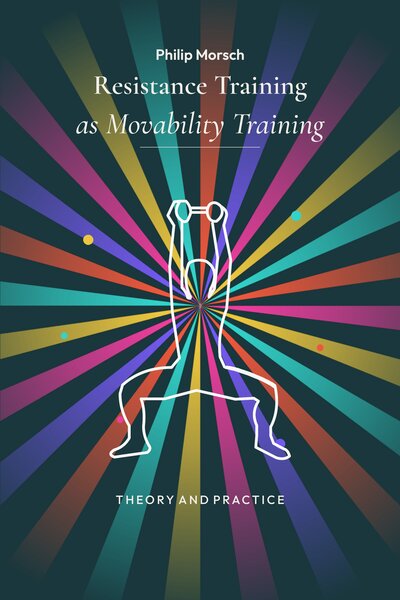
Why do many people find it difficult to access large ranges of motion – even though their joints and muscles would potentially allow it? This book advances a clear thesis: It is not tissue alone that limits movability – the interplay of strength, control, and movement experience plays a decisive role.
At the center stands a training approach that connects strength and movability. Through targeted loading in large ranges of motion, not only is freedom of movement expanded, but above all, active control in end-range positions is improved.
Based on current research, this book develops a new, multifactorial model of active movability – and derives from it a practical training system. With a deliberately small number of exercises, the ability to self-assess your own movability, and concrete training recommendations.
In personal coaching, we work together to identify which movement restrictions actually affect you – and how to systematically build strength, control, and movability where you need them. No cookie-cutter programs, no quick fixes.
Where are you now? What are your goals? Together we identify your individual areas for improvement – through practical tests, not questionnaires.
You receive a tailored plan that meaningfully integrates resistance training at long muscle lengths into your daily life and existing training.
Exercises at long muscle lengths require background knowledge. In coaching, you learn to execute movements safely and with control – with the right attentional focus.
Coaching sessions are also available as home visits in Kiel. Train where you feel comfortable.
Alongside movability coaching, I offer individual nutrition counseling. As I do not yet hold a professional society license, nutrition counseling is currently only available for self-paying clients. My background: B.Sc. in Nutritional Science (University of Jena) and ongoing Master’s studies in Sports Nutrition (IST University). No miracle diets, no health claims – evidence-based guidance and practical recommendations.
Training Areas
The coaching covers exercises for the following areas – the photos on this page show only a small selection:
Lower leg muscles · Upper leg muscles · Pelvic-trunk connection · Trunk muscles (spine) · Forearm muscles · Trunk-arm connection (shoulder movability)
Pricing
Individual coaching: 80 € / 45 minutes
Individual coaching (home visit): pricing on request
Nutrition counseling: 70 € / 45 minutes
Initial consultation (30 min, by phone or in person): free
Reduced rates are available upon individual request.
Who can participate?
People of all ages and training levels – from beginners to experienced athletes. Intensity, exercise selection, and progression are individually adapted. Everyone is welcome, regardless of background, gender, sexual orientation, or physical condition.
Accessibility note: My training space is currently not barrier-free. If you require accessible facilities, please contact me – we can arrange a home visit.
Location: Kiel, Germany (exact address to be added)
Contact: info@philipmorsch.com
Book a session:
Scheduling will be available soon. Feel free to email me directly.
Workshops and seminars for trainers, therapists, and enthusiasts are in planning. Want to be notified when dates are set?
ROM research investigates range of motion almost exclusively through passive mechanisms: stretch tolerance, tissue stiffness, and muscle-tendon architecture explain how far a joint can be moved by external force. Active ROM – the range of motion achievable through voluntary muscular contraction – is inconsistently defined in the literature, rarely measured as a primary outcome, and has not been systematically investigated as a construct with its own determinants (Morsch, 2026).
A central finding challenges the prevailing paradigm: strength training improves ROM to a similar extent as stretching (Afonso et al., 2021; Alizadeh et al., 2023). This suggests that mechanisms beyond passive tissue properties are involved.
Particularly informative: Wyon et al. (2013) showed in dancers that end-range strength training improved active ROM (+23%) more than stretching, while passive ROM increased similarly across all groups. The authors describe coordinative learning as a potential mechanism.
The model proposed in Morsch (2026) extends the established triad by factors largely overlooked in movability research:
Transparency note: This model is a scientifically grounded hypothesis. Evidence levels vary by factor. Details, testing strategies, and limitations are discussed in the full preprint.
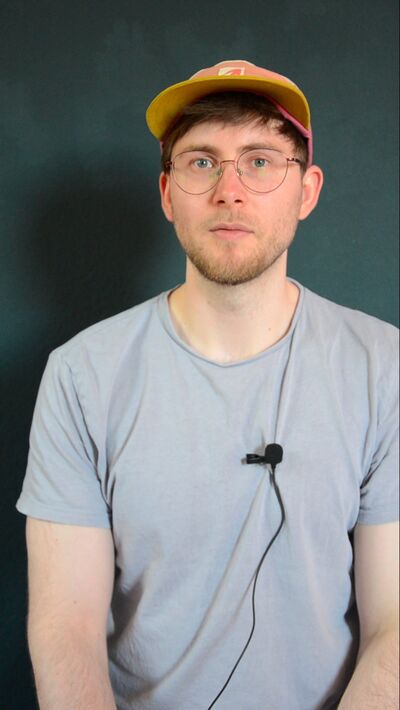
When I first trained in a gym at 18, I had pain, no progress, and many questions. What began frustratingly became my greatest motivation: to understand how training works – and how movement can be designed so that it strengthens rather than harms.
It is not only about strength, but also about perception, trust, and the ability to find control where most people are limited in their movability.